Our family is family that loves small towns and the wilderness. Coming to a big foreign city is very far outside our preferred living situation. If we could live anywhere in the world, I think it would be the wilderness of Montana. But, here we are in a very full and noisy foreign city. Every city has a cacophony of noise that is part of its daily life.
In our building with 8 homes we share a stairwell. Since everything is made of tile and cement everyone in the building knows when and who is going up or down the shared staircase. Also, due to the tile and cement scenario AND the old windows that don't block out sound well, we hear many of the street noises echoing through our house.
We share our garden wall with a furniture repair shop. Many people here have to work very long hours daily to try and make a living and the furniture man is no different. The owner seems to be there from the time we leave for school to 11 at night. There are a couple of young men who help him, so we hear them reupholstering and chatting daily. Many of the stores here have a garage door that protects the store front overnight, so the sound of people closing their garage doors is a common sound in the evening.
Our intersection also has a mechanic's shop where the shabaab (young men) like to hang out during the day. At night, especially on the weekend, they will rev their engines and show off their car maschismo.
The streets in the city are alive nearly all the time, so the sounds of neighbors greeting each other, kids playing soccer in the street or a group of school girls laughing as they walk home is an integral part of the daily soundtrack.
Being at an intersection also means that every time a car passes there is a quick honk of the horn. Car horns are used here all the time as an important part of driving.
You honk if:
-you drive through an intersection
-you see a person who looks like they're thinking about crossing the street
-you see a friend, neighbor, relative
-you see a pretty lady
-you need to ask a fellow driver a question while waiting at a light
-you need to ask a pedestrian a question
-you're celebrating a wedding, graduation, holiday...
-you're at a light too long
-you think another driver is an idiot
This is just a beginner's list of the all the appropriate ways and reasons for using your car horn here. Needless to say, it's a sound we're very used to.
Both the farm trucks and the 2nd hand/scrap metal/recyleable trucks have bull horns mounted on them that you can hear within a 2 block radius. At least 2 of these trucks pass our street on a daily basis.
The call to prayer is a melodic sound heard at least 5 times a day, but they also have a call to the call to prayer sometimes. Also, around noon on Fridays is the sermon. All these are heard from the various mosques that dot the city. When we first arrived, the early morning call would wake us up. But we've acclimated to the point that it no longer wakes us.
Then there's my favorite sound, the sound of the weekend or holiday mornings. Everyone here still observes an actual day of rest on these occasions. The streets are empty, the stores all closed until usually around noon or a little later. I've never lived in a place where everyone fully appreciates and takes the time to rest and be quiet. Maybe this is more valued here because of the general chaos of the day.
Welcome to another noisy day in the city. Nashkurallah!
Tuesday, May 28, 2013

Saturday, May 18, 2013
Since The Break-In
We have yet to move home as the kids are still nervous. Hopefully in the next couple of days we will head back.
We are so grateful for all our friends both here and in the States. Stateside friends and family have been available to let me vent my frustrations and thoughts. Friends here have given my kids the gift of an old iPod and a safe and quiet place to stay until they're ready to go back.
If you weren't already aware, this crime happened just 2 weeks before we need to decide whether it's financially possible and sensible for us to spend another year here learning Arabic. We will make this decision based upon the facts before us and not an emotional response to the last couple of weeks. Hard things (friend's dying, burglary) happen anywhere. Our conviction is that Biblically we are free to choose to stay here or move back to the States. Neither choice is sinful. But, above all we must be wise, both with our resources and with our family.
So, stayed tuned as we decide what is best!
Below is an encouraging quote sent to me by a friend after the burglary. It's long and in older English, but I found it very encouraging. Feel free to guess who wrote it:
"Here we are forcibly reminded of the inestimable felicity of a pious mind. Innumerable are the ills which beset human life, and present death in as many different forms. Not to go beyond ourselves, since the body is a receptacle, nay the nurse, of a thousand diseases, a man cannot move without carrying along with him many forms of destruction. His life is in a manner interwoven with death. For what else can be said where heat and cold bring equal danger?
Then, in what direction soever you turn, all surrounding objects not only may do harm, but almost openly threaten and seem to present immediate death. Go on board a ship, you are but a plank's breadth from death. Mount a horse, the stumbling of a foot endangers your life. Walk along the streets, every tile upon the roofs is a source of danger. If a sharp instrument is in your own hand, or that of a friend, the possible harm is manifest. All the savage beasts you see are so many beings armed for your destruction. Even within a high walled garden, where everything ministers to delight, a serpent will sometimes lurk. Your house, constantly exposed to fire, threatens you with poverty by day, with destruction by night. Your fields, subject to hail, mildew, drought, and other injuries, denounce barrenness, and thereby famine. I say nothing of poison, treachery, robbery, some of which beset us at home, others follow us abroad. Amid these perils, must not man be very miserable, as one who, more dead than alive, with difficulty draws an anxious and feeble breath, just as if a drawn sword were constantly suspended over his neck?
It may be said that these things happen seldom, at least not always, or to all, certainly never all at once. I admit it; but since we are reminded by the example of others, that they may also happen to us, and that our life is not an exception any more than theirs, it is impossible not to fear and dread as if they were to befall us. What can you imagine more grievous than such trepidation? Add that there is something like an insult to God when it is said, that man, the noblest of the creatures, stands exposed to every blind and random stroke of fortune. Here, however, we were only referring to the misery which man should feel, were he placed under the dominion of chance.
11. Certainty about God's providence puts joyous trust toward God in our hearts
But when once the light of Divine Providence has illumined the believer's soul, he is relieved and set free, not only from the extreme fear and anxiety which formerly oppressed him, but from all care. For as he justly shudders at the idea of chance, so he can confidently commit himself to God. This, I say, is his comfort, that his heavenly Father so embraces all things under his power—so governs them at will by his nod—so regulates them by his wisdom, that nothing takes place save according to his appointment; that received into his favour, and entrusted to the care of his angels neither fire, nor water, nor sword, can do him harm, except in so far as God their master is pleased to permit. For thus sings the Psalm, "Surely he shall deliver thee from the snare of the fowler, and from the noisome pestilence. He shall cover thee with his feathers, and under his wings shalt thou trust; his truth shall be thy shield and buckler. Thou shalt not be afraid for the terror by night; nor for the arrow that flieth by day; nor for the pestilence that walketh in darkness; nor for the destruction that wasteth at noonday" &c. (Ps. 91: 2-6.) Hence the exulting confidence of the saints, "The Lord is on my side; I will not fear: what can man do unto me? The Lord taketh my part with them that help me." "Though an host should encamp against me, my heart shall not fear." "Yea, though I walk through the valley of the shadow of death, I will fear no evil." (Ps. 118: 6; 27: 3; 23: 4.)
(My note: I thought this was an appropriate place to insert the section from paragraph 5.)
I concede more—that thieves and murderers, and other evil-doers, are instruments of Divine Providence, being employed by the Lord himself to execute the judgements which he has resolved to inflict. But I deny that this forms any excuse for their misdeeds. For how? Will they implicate God in the same iniquity with themselves, or will they cloak their depravity by his righteousness? They cannot exculpate themselves, for their own conscience condemns them: they cannot charge God, since they perceive the whole wickedness in themselves, and nothing in Him save the legitimate use of their wickedness. But it is said he works by their means. And whence, I pray, the fetid odour of a dead body, which has been unconfined and putrefied by the sun's heat? All see that it is excited by the rays of the sun, but no man therefore says that the fetid odour is in them. In the same way, while the matter and guilt of wickedness belongs to the wicked man, why should it be thought that God contracts any impurity in using it at pleasure as his instrument? Have done, then, with that dog-like petulance which may, indeed, bay from a distance at the justice of God, but cannot reach it!
How comes it, I ask, that their confidence never fails, but just that while the world apparently revolves at random, they know that God is every where at work, and feel assured that his work will be their safety? When assailed by the devil and wicked men, were they not confirmed by remembering and meditating on Providence, they should, of necessity, forthwith despond. But when they call to mind that the devil, and the whole train of the ungodly, are, in all directions, held in by the hand of God as with a bridle, so that they can neither conceive any mischief, nor plan what they have conceived, nor how much soever they may have planned, move a single finger to perpetrate, unless in so far as he permits, nay, unless in so far as he commands; that they are not only bound by his fetters, but are even forced to do him service,—when the godly think of all these things they have ample sources of consolation. For, as it belongs to the lord to arm the fury of such foes and turn and destine it at pleasure, so it is his also to determine the measure and the end, so as to prevent them from breaking loose and wantoning as they list. Supported by this conviction,
Paul, who had said in one place that his journey was hindered by Satan, (1 Thess. 2:18,) in another resolves, with the permission of God, to undertake it, (1 Cor. 16:7.) If he had only said that Satan was the obstacle, he might have seemed to give him too much power, as if he were able even to overturn the counsels of God; but now, when he makes God the disposer, on whose permission all journies depend, he shows, that however Satan may contrive, he can accomplish nothing except in so far as He pleases to give the word. For the same reason, David, considering the various turns which human life undergoes as it rolls, and in a manner whirls around, retakes himself to this asylum, "My times are in thy hand," (Ps. 31:15.) He might have said the course of life or time in the singular number, but by times he meant to express, that how unstable soever the condition of man may be, the vicissitudes which are ever and anon taking place are under divine regulation. Hence Rezin and the king of Israel, after they had joined their forces for the destruction of Israel, and seemed torches which had been kindled to destroy and consume the land, are termed by the prophet "smoking fire brands." They could only emit a little smoke, (Is. 7: 4.) So Pharaoh, when he was an object of dread to all by his wealth and strength, and the multitude of his troops, is compared to the largest of beasts, while his troops are compared to fishes; and God declares that he will take both leader and army with his hooks, and drag them whither he pleases, (Ezek. 29: 4.) In one word, not to dwell longer on this, give heed, and you will at once perceive that ignorance of Providence is the greatest of all miseries, and the knowledge of it the highest happiness. "
We are so grateful for all our friends both here and in the States. Stateside friends and family have been available to let me vent my frustrations and thoughts. Friends here have given my kids the gift of an old iPod and a safe and quiet place to stay until they're ready to go back.
If you weren't already aware, this crime happened just 2 weeks before we need to decide whether it's financially possible and sensible for us to spend another year here learning Arabic. We will make this decision based upon the facts before us and not an emotional response to the last couple of weeks. Hard things (friend's dying, burglary) happen anywhere. Our conviction is that Biblically we are free to choose to stay here or move back to the States. Neither choice is sinful. But, above all we must be wise, both with our resources and with our family.
So, stayed tuned as we decide what is best!
Below is an encouraging quote sent to me by a friend after the burglary. It's long and in older English, but I found it very encouraging. Feel free to guess who wrote it:
"Here we are forcibly reminded of the inestimable felicity of a pious mind. Innumerable are the ills which beset human life, and present death in as many different forms. Not to go beyond ourselves, since the body is a receptacle, nay the nurse, of a thousand diseases, a man cannot move without carrying along with him many forms of destruction. His life is in a manner interwoven with death. For what else can be said where heat and cold bring equal danger?
Then, in what direction soever you turn, all surrounding objects not only may do harm, but almost openly threaten and seem to present immediate death. Go on board a ship, you are but a plank's breadth from death. Mount a horse, the stumbling of a foot endangers your life. Walk along the streets, every tile upon the roofs is a source of danger. If a sharp instrument is in your own hand, or that of a friend, the possible harm is manifest. All the savage beasts you see are so many beings armed for your destruction. Even within a high walled garden, where everything ministers to delight, a serpent will sometimes lurk. Your house, constantly exposed to fire, threatens you with poverty by day, with destruction by night. Your fields, subject to hail, mildew, drought, and other injuries, denounce barrenness, and thereby famine. I say nothing of poison, treachery, robbery, some of which beset us at home, others follow us abroad. Amid these perils, must not man be very miserable, as one who, more dead than alive, with difficulty draws an anxious and feeble breath, just as if a drawn sword were constantly suspended over his neck?
It may be said that these things happen seldom, at least not always, or to all, certainly never all at once. I admit it; but since we are reminded by the example of others, that they may also happen to us, and that our life is not an exception any more than theirs, it is impossible not to fear and dread as if they were to befall us. What can you imagine more grievous than such trepidation? Add that there is something like an insult to God when it is said, that man, the noblest of the creatures, stands exposed to every blind and random stroke of fortune. Here, however, we were only referring to the misery which man should feel, were he placed under the dominion of chance.
11. Certainty about God's providence puts joyous trust toward God in our hearts
But when once the light of Divine Providence has illumined the believer's soul, he is relieved and set free, not only from the extreme fear and anxiety which formerly oppressed him, but from all care. For as he justly shudders at the idea of chance, so he can confidently commit himself to God. This, I say, is his comfort, that his heavenly Father so embraces all things under his power—so governs them at will by his nod—so regulates them by his wisdom, that nothing takes place save according to his appointment; that received into his favour, and entrusted to the care of his angels neither fire, nor water, nor sword, can do him harm, except in so far as God their master is pleased to permit. For thus sings the Psalm, "Surely he shall deliver thee from the snare of the fowler, and from the noisome pestilence. He shall cover thee with his feathers, and under his wings shalt thou trust; his truth shall be thy shield and buckler. Thou shalt not be afraid for the terror by night; nor for the arrow that flieth by day; nor for the pestilence that walketh in darkness; nor for the destruction that wasteth at noonday" &c. (Ps. 91: 2-6.) Hence the exulting confidence of the saints, "The Lord is on my side; I will not fear: what can man do unto me? The Lord taketh my part with them that help me." "Though an host should encamp against me, my heart shall not fear." "Yea, though I walk through the valley of the shadow of death, I will fear no evil." (Ps. 118: 6; 27: 3; 23: 4.)
(My note: I thought this was an appropriate place to insert the section from paragraph 5.)
I concede more—that thieves and murderers, and other evil-doers, are instruments of Divine Providence, being employed by the Lord himself to execute the judgements which he has resolved to inflict. But I deny that this forms any excuse for their misdeeds. For how? Will they implicate God in the same iniquity with themselves, or will they cloak their depravity by his righteousness? They cannot exculpate themselves, for their own conscience condemns them: they cannot charge God, since they perceive the whole wickedness in themselves, and nothing in Him save the legitimate use of their wickedness. But it is said he works by their means. And whence, I pray, the fetid odour of a dead body, which has been unconfined and putrefied by the sun's heat? All see that it is excited by the rays of the sun, but no man therefore says that the fetid odour is in them. In the same way, while the matter and guilt of wickedness belongs to the wicked man, why should it be thought that God contracts any impurity in using it at pleasure as his instrument? Have done, then, with that dog-like petulance which may, indeed, bay from a distance at the justice of God, but cannot reach it!
How comes it, I ask, that their confidence never fails, but just that while the world apparently revolves at random, they know that God is every where at work, and feel assured that his work will be their safety? When assailed by the devil and wicked men, were they not confirmed by remembering and meditating on Providence, they should, of necessity, forthwith despond. But when they call to mind that the devil, and the whole train of the ungodly, are, in all directions, held in by the hand of God as with a bridle, so that they can neither conceive any mischief, nor plan what they have conceived, nor how much soever they may have planned, move a single finger to perpetrate, unless in so far as he permits, nay, unless in so far as he commands; that they are not only bound by his fetters, but are even forced to do him service,—when the godly think of all these things they have ample sources of consolation. For, as it belongs to the lord to arm the fury of such foes and turn and destine it at pleasure, so it is his also to determine the measure and the end, so as to prevent them from breaking loose and wantoning as they list. Supported by this conviction,
Paul, who had said in one place that his journey was hindered by Satan, (1 Thess. 2:18,) in another resolves, with the permission of God, to undertake it, (1 Cor. 16:7.) If he had only said that Satan was the obstacle, he might have seemed to give him too much power, as if he were able even to overturn the counsels of God; but now, when he makes God the disposer, on whose permission all journies depend, he shows, that however Satan may contrive, he can accomplish nothing except in so far as He pleases to give the word. For the same reason, David, considering the various turns which human life undergoes as it rolls, and in a manner whirls around, retakes himself to this asylum, "My times are in thy hand," (Ps. 31:15.) He might have said the course of life or time in the singular number, but by times he meant to express, that how unstable soever the condition of man may be, the vicissitudes which are ever and anon taking place are under divine regulation. Hence Rezin and the king of Israel, after they had joined their forces for the destruction of Israel, and seemed torches which had been kindled to destroy and consume the land, are termed by the prophet "smoking fire brands." They could only emit a little smoke, (Is. 7: 4.) So Pharaoh, when he was an object of dread to all by his wealth and strength, and the multitude of his troops, is compared to the largest of beasts, while his troops are compared to fishes; and God declares that he will take both leader and army with his hooks, and drag them whither he pleases, (Ezek. 29: 4.) In one word, not to dwell longer on this, give heed, and you will at once perceive that ignorance of Providence is the greatest of all miseries, and the knowledge of it the highest happiness. "
Tuesday, May 14, 2013
Not the Post I was Expecting to Write
Well, this has been an unexpected 24 hours. Our house was burglarized yesterday.
The thieves must have been watching us for awhile because they knew when we were gone. Monday is the day when we are absent from our house the longest. They had 8 hours in which to accomplish their task.
From what we can tell, they tried to pry open the back kitchen door first (the most private door to our house). When that didn't budge, they ripped the Arabic toilet window screen only to discover that it was barred (all our windows have bars). So then they had to move to our garden entrance which, while surrounded by our garden trees, is the most visible. This door obviously gave them trouble as well, but they finally succeeded in prying it open enough to get in.
They were thorough. They went through every room, drawer and suitcase. From the dusting the police did of fingerprints, it's obvious that they wore gloves. Our room was in complete disarray.
But it was an odd burglary for what they didn't take. They left our desktop computer, our passports, credit cards and our Wii. What they took was all very portable and they even took a plastic bag to carry it all in. They took 2 older iPods, the kids' Kindle Fire, our daughter's Nintendo DS, some cash and my husband's Mac.
The Mac is our biggest concern because of all the personal information on it. Hopefully the thieves only desire is to wipe everything from the computer to resell it.
The iPods are old and not much for resale value and the Kindle is completely useless to them since Amazon was able to wipe it and lock it down via internet.
What they took from us is our time, some financially valuable things and our sense of trust and safety in the house we're in. My poor son was very nervous and scared last night. My husband didn't sleep and I'm not sure when any of us will feel safe sleeping in this house again.
Unfortunately this also colors our view of living in a foreign culture. Our neighbors all said this never happens around here to them. I believe the fact that we're foreigners played a part in all this. Everyone that the police interviewed said that they didn't see anything. This is a very busy neighborhood where people are nearly always around and neighbor's routinely watch each other's business from their windows. If this neighborhood can't look out for us, do I want to stay in this house? Do I want to continue this adventure of living in a foreign country?
These are the sort of things you think about in the first 24 hours. For now, the priority is making sure our kids feel safe.
The thieves must have been watching us for awhile because they knew when we were gone. Monday is the day when we are absent from our house the longest. They had 8 hours in which to accomplish their task.
From what we can tell, they tried to pry open the back kitchen door first (the most private door to our house). When that didn't budge, they ripped the Arabic toilet window screen only to discover that it was barred (all our windows have bars). So then they had to move to our garden entrance which, while surrounded by our garden trees, is the most visible. This door obviously gave them trouble as well, but they finally succeeded in prying it open enough to get in.
They were thorough. They went through every room, drawer and suitcase. From the dusting the police did of fingerprints, it's obvious that they wore gloves. Our room was in complete disarray.
But it was an odd burglary for what they didn't take. They left our desktop computer, our passports, credit cards and our Wii. What they took was all very portable and they even took a plastic bag to carry it all in. They took 2 older iPods, the kids' Kindle Fire, our daughter's Nintendo DS, some cash and my husband's Mac.
The Mac is our biggest concern because of all the personal information on it. Hopefully the thieves only desire is to wipe everything from the computer to resell it.
The iPods are old and not much for resale value and the Kindle is completely useless to them since Amazon was able to wipe it and lock it down via internet.
What they took from us is our time, some financially valuable things and our sense of trust and safety in the house we're in. My poor son was very nervous and scared last night. My husband didn't sleep and I'm not sure when any of us will feel safe sleeping in this house again.
Unfortunately this also colors our view of living in a foreign culture. Our neighbors all said this never happens around here to them. I believe the fact that we're foreigners played a part in all this. Everyone that the police interviewed said that they didn't see anything. This is a very busy neighborhood where people are nearly always around and neighbor's routinely watch each other's business from their windows. If this neighborhood can't look out for us, do I want to stay in this house? Do I want to continue this adventure of living in a foreign country?
These are the sort of things you think about in the first 24 hours. For now, the priority is making sure our kids feel safe.
Friday, May 10, 2013
Shopping
I think I addressed this topic briefly in a previous post, but shopping is different here from what we know Stateside. The exception is the wealthy in this country. The west side of the city has a large amount of malls and stores that are identical to the States. But, for the majority of the people in this city we still rely on the local stores for our daily and weekly fare.
There are certain stores that you will see every few blocks in all neighborhoods because they're vital to the everyday existence of the people
One note: As you read the description of the various stores, remember that all of the stores are the size of a spacious living room, though sometimes smaller.
Dukkan: These are similar in style to convenience stores ( think 7-11) in the States. Each one is individually owned, often by a man who lives in the neighborhood. My local dukkan is two block from my house and is owned by two older gentlemen (we designated it the "Old Man Dukkan"). They carry a variety of staple dried goods, candies, toiletries, some fridge/freezer foods and fresh bread two to three times a day. Unless you have a car or time to head to the large grocery store, this is the place you pop into a couple times a week. Prices are usually very close to the price of goods at the large grocery store, plus you aren't charged an extra small tax that the larger stores charge.
Bread store: These are further apart in neighborhoods. They're busy most often before work as people pick up bread for breakfast and work. They churn out large amounts of white and wheat pita bread which is the staple of every home in the city. They also carry dry biscuits, long pretzels and fresh French loaves of bread. I'd love to visit the bread store more often, but the closest one is 5 blocks from our house.
Coffee Stand: These are truly everywhere and they stand out starkly in the rows of shops. They usually have a distinctive black and red checkered design painted on their exteriors. They hold shiny carafes of strong black tea and the smells of cardamom laced Turkish coffee waft from their open store fronts. In the summer they add a slushy machine to the offerings. There is often an attendant standing in front of the store waiting for a driver to stop and order. Taxi drivers will occasionally stop mid-trip for a caffeine boost, but often offer to buy for their passengers as well.
Snack shop: These are the kids' favorite shops. They're often open after the kids are out of school because they cater to them. Racks of chips, tables of sweets and fridges of pop at very cheap prices make them a very popular place.
Fruit and Vegetable Shop: I have a guy I frequent a block from my house. He has boxes of fruits and veggies on raised wooden tables against the walls. I choose what I want and then take it to his low table that has a money drawer, calculator and scale. He weighs each bag, adds them up on the calculator and takes my proffered coins. While these stores are fairly reasonably priced, there is an even cheaper, easier way to get fruit and veggies.
Farm Trucks: Nearly every day of the week you can hear a voice hollering through a PA system on top of a truck. As it drives closer you can make out the call of, "Come get cucumbers, come get tomatoes, come get potatoes, onions, cabbage, oranges....". These trucks drive in from farms outside the city to sell boxes of goods to the people. If you flag down a truck you are required to buy by the box. The prices are 2 to 5 times cheaper than buying at your local stand. BUT without a freezer you'd better use or give away quickly the 6 pounds of cucumbers you've bought!
While they aren't stores, we have some other very useful kinds of products move through our streets.
Push carts: I'm sure there are varieties I have yet to spot, but our street vendors tend to come in two kinds. Most mornings I wake to the yell of the breakfast sandwich vendor. He will slap together egg, falafel, spices, cheese, yogurt, cucumber, or hummus on a small french loaf for needy breakfasters. The other cart is the trinkets and cotton candy man. I know it's him by the slide whistle he blows.
Propane carts/trucks: Since propane is the way we cook and heat our homes, this man is in high demand. You can hear the tapping of a wrench on a propane bottle if the cart is walking by or an annoying song (think ice cream truck annoying) playing if the propane truck is passing.
Water bottle trucks: These trucks are actually delivery trucks. The city water is not the best, so many people buy coupon books from local water bottle services. We have two bottles which last us about a week. So, once a week I call for the water delivery to come and switch out bottles.
Not sure how well I described these, does this post raise any related questions for you?
There are certain stores that you will see every few blocks in all neighborhoods because they're vital to the everyday existence of the people
One note: As you read the description of the various stores, remember that all of the stores are the size of a spacious living room, though sometimes smaller.
Dukkan: These are similar in style to convenience stores ( think 7-11) in the States. Each one is individually owned, often by a man who lives in the neighborhood. My local dukkan is two block from my house and is owned by two older gentlemen (we designated it the "Old Man Dukkan"). They carry a variety of staple dried goods, candies, toiletries, some fridge/freezer foods and fresh bread two to three times a day. Unless you have a car or time to head to the large grocery store, this is the place you pop into a couple times a week. Prices are usually very close to the price of goods at the large grocery store, plus you aren't charged an extra small tax that the larger stores charge.
Bread store: These are further apart in neighborhoods. They're busy most often before work as people pick up bread for breakfast and work. They churn out large amounts of white and wheat pita bread which is the staple of every home in the city. They also carry dry biscuits, long pretzels and fresh French loaves of bread. I'd love to visit the bread store more often, but the closest one is 5 blocks from our house.
Coffee Stand: These are truly everywhere and they stand out starkly in the rows of shops. They usually have a distinctive black and red checkered design painted on their exteriors. They hold shiny carafes of strong black tea and the smells of cardamom laced Turkish coffee waft from their open store fronts. In the summer they add a slushy machine to the offerings. There is often an attendant standing in front of the store waiting for a driver to stop and order. Taxi drivers will occasionally stop mid-trip for a caffeine boost, but often offer to buy for their passengers as well.
Snack shop: These are the kids' favorite shops. They're often open after the kids are out of school because they cater to them. Racks of chips, tables of sweets and fridges of pop at very cheap prices make them a very popular place.
Fruit and Vegetable Shop: I have a guy I frequent a block from my house. He has boxes of fruits and veggies on raised wooden tables against the walls. I choose what I want and then take it to his low table that has a money drawer, calculator and scale. He weighs each bag, adds them up on the calculator and takes my proffered coins. While these stores are fairly reasonably priced, there is an even cheaper, easier way to get fruit and veggies.
Farm Trucks: Nearly every day of the week you can hear a voice hollering through a PA system on top of a truck. As it drives closer you can make out the call of, "Come get cucumbers, come get tomatoes, come get potatoes, onions, cabbage, oranges....". These trucks drive in from farms outside the city to sell boxes of goods to the people. If you flag down a truck you are required to buy by the box. The prices are 2 to 5 times cheaper than buying at your local stand. BUT without a freezer you'd better use or give away quickly the 6 pounds of cucumbers you've bought!
While they aren't stores, we have some other very useful kinds of products move through our streets.
Push carts: I'm sure there are varieties I have yet to spot, but our street vendors tend to come in two kinds. Most mornings I wake to the yell of the breakfast sandwich vendor. He will slap together egg, falafel, spices, cheese, yogurt, cucumber, or hummus on a small french loaf for needy breakfasters. The other cart is the trinkets and cotton candy man. I know it's him by the slide whistle he blows.
Propane carts/trucks: Since propane is the way we cook and heat our homes, this man is in high demand. You can hear the tapping of a wrench on a propane bottle if the cart is walking by or an annoying song (think ice cream truck annoying) playing if the propane truck is passing.
Water bottle trucks: These trucks are actually delivery trucks. The city water is not the best, so many people buy coupon books from local water bottle services. We have two bottles which last us about a week. So, once a week I call for the water delivery to come and switch out bottles.
Not sure how well I described these, does this post raise any related questions for you?
Sunday, April 28, 2013
No Time to Post Words
Life has been very busy. I know I haven't blogged in awhile, so here are some pictures. The first three are from the Citadel in Amman. It's a collection of ruins from the various empires that ruled this region over the centuries.


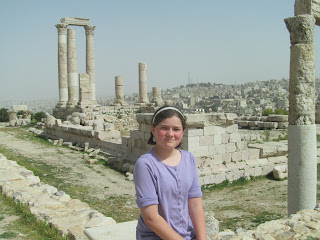


These are a few photos from our time in the Dead Sea. Both events were a part of my friend's visit to Amman.


Sunday, March 24, 2013
31 Years
Today is my 31st birthday and I have been reflecting on my life.
Life has been tremendously fun and interesting over the last 31 years. If it were all to fall apart tomorrow and I were to have nothing but suffering I would have absolutely no reason to complain. I am a decrepit being who has had my eyes opened to the sovereignty of God. God continues to bring me both pleasant and challenging events both internally and externally for His glory. This is by far the utmost reason for my thankfulness. Though despite this more than sufficient gift of grace, He has given me far more common grace than I deserve.
-My childhood was one of ease and enjoyable experiences in the beautiful state of Montana. I was able to grow up well-fed, well-educated with a myriad of modern comforts and conveniences. I had many extracurricular activities, many friends and a great family. And yet, He deemed fit to give me more grace.
-My married life has been one of excitement and joy. I have been given a husband who continues to lead this household in God-honoring ways. Jason is such a supportive and enjoyable husband. I never knew married life would be this great. Through his leadership of this family, we've traveled to many countries, taught the kids a love of God, the outdoors and soccer, and done so much more in our daily life than my routine ways would have given us. I have been given two children whose personalities are so much more fun than I had anticipated. Being a mother has caused me to be less selfish and learn how to teach others. And yet, still more grace.
-God has given me life-long friends that cause me to grow in further knowledge of Him through expositional study of the Bible. He has given us the Nelkins who we can grow old with as best friends. He's given us a church body in Colorado that has taught us why God saw fit to have a church age.
These and so many more graces I have been given by the One who has authority over all things. So, for all this and so much more I am eternally grateful for 31 years.
Life has been tremendously fun and interesting over the last 31 years. If it were all to fall apart tomorrow and I were to have nothing but suffering I would have absolutely no reason to complain. I am a decrepit being who has had my eyes opened to the sovereignty of God. God continues to bring me both pleasant and challenging events both internally and externally for His glory. This is by far the utmost reason for my thankfulness. Though despite this more than sufficient gift of grace, He has given me far more common grace than I deserve.
-My childhood was one of ease and enjoyable experiences in the beautiful state of Montana. I was able to grow up well-fed, well-educated with a myriad of modern comforts and conveniences. I had many extracurricular activities, many friends and a great family. And yet, He deemed fit to give me more grace.
-My married life has been one of excitement and joy. I have been given a husband who continues to lead this household in God-honoring ways. Jason is such a supportive and enjoyable husband. I never knew married life would be this great. Through his leadership of this family, we've traveled to many countries, taught the kids a love of God, the outdoors and soccer, and done so much more in our daily life than my routine ways would have given us. I have been given two children whose personalities are so much more fun than I had anticipated. Being a mother has caused me to be less selfish and learn how to teach others. And yet, still more grace.
-God has given me life-long friends that cause me to grow in further knowledge of Him through expositional study of the Bible. He has given us the Nelkins who we can grow old with as best friends. He's given us a church body in Colorado that has taught us why God saw fit to have a church age.
These and so many more graces I have been given by the One who has authority over all things. So, for all this and so much more I am eternally grateful for 31 years.
Saturday, March 16, 2013
Not So Far Away
I had the privilege of flying back to the States for a week in January for the funeral of my grandpa. I had a journey of 6,900 miles and 24 hours to reach Colorado where I hopped into a car with my sister and drove for 550 miles and 8 hours to Montana. No, this isn't a math story problem, but I state these numbers because I believe most people think that to be a great distance and time commitment. I suppose it is.
But, after 12 years of traveling to many countries and waiting in many airports, I've gained a perspective that I think few have. The world is a very small place and getting anywhere by plane is really a relatively quick and reasonably priced venture. We've seen friends in 17 or so countries while living on a shoe string income by American standards. We're able to visit relatives in Tennessee and Montana on a fairly regular basis as well. It struck me starkly on the flight back to the States this time because the trip was put together so quickly. Isn't it absolutely amazing that it can take humanity a day and a half to travel around the world to see family?!
From friends and family alike, we still hear amazement and trepidation at the thought of spending time in foreign places. But the reality of the commonality of mankind on this planet has been pushed forward more and more strongly the more we travel. People treat each other much the same for many of the same reasons (depravity and common grace) here as they do in our home state of Colorado. Yes, there are cultural and religious nuances everywhere, but that's exactly what they are. Nuances.
Our lives are in some ways quite long, so spending 10 years or 10 hours living or traveling in a foreign culture doesn't seem like such a long time to me anymore.
"Come now you who say 'Today or tomorrow we will go to such and such a city, and spend a year there and engage in business and make a profit.' Yet you do not know what your life will be like tomorrow. You are just a vapor that appears for a little while and then vanishes away. INSTEAD, you ought to say, 'If The Lord wills (inshallah) we will live and also do this or that.' But as it is, you boast on your arrogance; all such boasting is evil. Therefore to one who knows the right thing to do and does not do it, to him it is sin." James 4:13-17
Tuesday, March 05, 2013
Where's My Brain?
Everyone has stated that this is the toughest semester of the four semesters at our language school. I wholeheartedly agree since in the last two weeks I broke out in tears during grammar class AND had my brain shut down all last week. I've never experienced such a response from my brain before. It literally felt as though so much had been stuffed in there that my brain refused to give me any information I needed and kept demanding that I just take a nap. I have a newfound appreciation for the job of school that my kids experience every day! So, in search of information on why my brain reacted this way, I found this helpful information:
All this makes me glad that we have this opportunity to immerse ourselves in this culture. Even if it does often make me want to take a nap!
There's another interesting study cited here: http://www.sciencedaily.com/releases/2012/10/121008082953.htm
By the time you reach adulthood, learning a foreign language is a struggle – even after you memorize grammar and vocabulary, there's no guarantee that you'll understand a fast-talking native speaker, and when you stop studying for even a month, you seem to forget everything you'd learned.
Children's brains, on the other hand, are hard-wired to let them pick up languages with ease. Plus, a new study finds that even adult brains can re-wire themselves to mimic the brain patterns of native speakers – and this effect is amplified if they study by immersing themselves in a foreign language, rather than sitting in a classroom. And when they were not exposed to the new language for five months, their native-speaker brain patterns actually got stronger.
The new finding contrasts with previous studies, which indicated that similar levels of language learning could be achieved by both studying grammar rules in a classroom setting, or "explicit training," and immersion in the language, or "implicit training," defined as "training that engages…learners with the target language but does not provide any explicit information or direction to search for rules." But these studies failed to examine students' brains.
Researchers from Georgetown University Medical Center and the University of Illinois – Chicago used an artificial 13-word language, Brocanto2, to describe a computer game. While the artificial language's small vocabulary allowed subjects to learn it fairly quickly, its grammar was relatively sophisticated, mimicking the rules of Romance languages while diverging from the participants' native English grammar.
Next, the researchers separated 41 adults, who spoke only English, into two groups at random. One would study Brocanto2 through explicit, and the other through implicit, training. To standardize the brain scans, the participants all had to be right handed.
After studying and practicing the artificial language, the subjects listened to Brocanto2 sentences that were either correct or contained grammatical errors, and they had to press buttons to indicate whether the sentences were "good" or "bad." While participants underwent testing, EEG electrodes monitored the electrical activity on their scalps, which allowed the researchers to build a picture of their brain activity.
While both groups achieved similar proficiency in the artificial language, their brains weren't as evenly matched. Only the brains in the immersion training group processed language like native speakers' brains would. And even after five months of zero exposure to Brocanto2, the brain patterns in both groups only became more similar to those of native speakers.
This was an article in from the io9 website: http://io9.com/5897308/immersion-in-a-foreign-language-rewires-your-brain-+-especially-when-you-take-time-off"The results demonstrate that substantial periods with no [language] exposure are not necessarily detrimental. Rather, benefits may ensue from such periods of time even when there is no [language] exposure. Interestingly, both before and after the delay the implicitly trained group showed more native-like processing than the explicitly trained group, indicating that type of training also affects the attainment of nativelike processing in the brain.
All this makes me glad that we have this opportunity to immerse ourselves in this culture. Even if it does often make me want to take a nap!
There's another interesting study cited here: http://www.sciencedaily.com/releases/2012/10/121008082953.htm
Friday, February 15, 2013
Tawjihi Testing
There's nothing quite so fun as being woken up at 3am by the sound of teenagers cheering, fireworks firing, guns firing into the air and cars honking their horns.
This wasn't a national holiday or protest that caused the noise, but the results of the annual Tawjihi tests. Tawjihi is the general secondary examination in Jordan, and is given by the Ministry of Education annually. Students take the exam after the completing two years of junior high school.
This wasn't a national holiday or protest that caused the noise, but the results of the annual Tawjihi tests. Tawjihi is the general secondary examination in Jordan, and is given by the Ministry of Education annually. Students take the exam after the completing two years of junior high school.
Exam is a standardized scale for measuring the efficiency of the Kingdom of education.
To succeed in the Tawjihi test of the student should get more than 50% for each tested material. Upon succeeding, student receives a certificate of high school, and this is the first certificate earned by the student in his school.
It's difficult to find a job without a high school degree. When you get a job, the person who owns a Tawjihi certificate receives a good salary.
Tawjihi Examination tests the ability of the student to enroll in graduate studies such as colleges and universities. It is also decided by the university, which course will be joined by the student what the test results allow him to specialize in. You cannot belong to the university without Tawjihi certificate.
Many parents help their kids prepare for these exams for months and are heavily invested in the outcome as these are the kids that need to take care of them someday. Somehow the ACT and SAT don't seem to hold the same weight as this test in this country does.
Sunday, February 10, 2013
Give It To Me Straight Doc
This wasn't a post that I was expecting to write anytime in the near future. Mostly because I didn't expect to see a doctor so soon. But since my aging body betrayed me with an aberration, I decided it was time to track down a doctor.
Now, let me start off by saying we do have international health insurance and I could have searched their network for doctors. But, I've learned in my world travels, that many places have very affordable health care and that usually friends can recommend trusted doctors. So, I called a nice lady doctor of a friend and made an appointment for later that day. The Russian doctor was very kind and asked all the questions one expects from a doctor. She soon determined that I ought to go get an ultrasound and mammogram done and called an office she knew to see if I could go up there. So, 45 minutes later I'm having those procedures performed by a good Jordanian doctor who is also very competent and thorough.
The next day, I stopped by the radiologist's office and picked up his report and my films and went back to my primary doctor. She read the report, gave me advice and sent me on my way.
Total time spent dealing with doctor and radiologist: 2 hours
Travel time to appointments: 3 hours
Cost of primary doctor visit: $14
Cost of radiology visit and films: $98
Not having to deal with a bloated and complicated medical and health insurance system: priceless
These are all private(not state) doctors and the quality of care and equipment was just as good as one would get stateside. In past overseas trips, both Jason and I have gone to the dentist for the same reason of good care at a fraction of the cost.
Will I end up using our international health care plan while we're here? That remains to be seen. But I'm very pleased with my limited experience of cash for services rendered.
P.S. My health issue turned out to be benign just so you know.
Now, let me start off by saying we do have international health insurance and I could have searched their network for doctors. But, I've learned in my world travels, that many places have very affordable health care and that usually friends can recommend trusted doctors. So, I called a nice lady doctor of a friend and made an appointment for later that day. The Russian doctor was very kind and asked all the questions one expects from a doctor. She soon determined that I ought to go get an ultrasound and mammogram done and called an office she knew to see if I could go up there. So, 45 minutes later I'm having those procedures performed by a good Jordanian doctor who is also very competent and thorough.
The next day, I stopped by the radiologist's office and picked up his report and my films and went back to my primary doctor. She read the report, gave me advice and sent me on my way.
Total time spent dealing with doctor and radiologist: 2 hours
Travel time to appointments: 3 hours
Cost of primary doctor visit: $14
Cost of radiology visit and films: $98
Not having to deal with a bloated and complicated medical and health insurance system: priceless
These are all private(not state) doctors and the quality of care and equipment was just as good as one would get stateside. In past overseas trips, both Jason and I have gone to the dentist for the same reason of good care at a fraction of the cost.
Will I end up using our international health care plan while we're here? That remains to be seen. But I'm very pleased with my limited experience of cash for services rendered.
P.S. My health issue turned out to be benign just so you know.
Saturday, January 12, 2013
Spoiled by Heated Housing
It is just as I feared, by being in heated housing in Ukraine I've become unaccustomed to the chill in our home. Granted, it's been an abnormally cold week. The country had 2 days of deluging rain followed by 2 days of snow. This country is ill-equipped to handle snow. There were flooded streets and blocked drains.
On a positive note, the water reservoirs are already at 45% of their needed levels in contrast to 18% as of last year. So, everyone is glad for the moisture, but the cold is not good for any of us. These houses aren't built for this cold as I've stated in previous posts. We are on our third night of being able to see our breath in our bedrooms. All of our time at home is spent in the inner living room that has no wall to the outdoors and has the heater on constantly. The heater merely takes the edge off the cold, not really warming the rooms. I'm currently wearing 4 layers of shirts, wool socks and slippers. You don't dare touch the tile floor with a bare foot as it is painfully cold. The electric heating pads and tights we bought in Ukraine have become vital for nightly comfort. We are wishing we had 0 degree sleeping bags for the kid's to sleep in. Thankfully the cold season is very short. So, wrap an extra blanket around your shoulders and think of us over here in the chilly desert.
On a positive note, the water reservoirs are already at 45% of their needed levels in contrast to 18% as of last year. So, everyone is glad for the moisture, but the cold is not good for any of us. These houses aren't built for this cold as I've stated in previous posts. We are on our third night of being able to see our breath in our bedrooms. All of our time at home is spent in the inner living room that has no wall to the outdoors and has the heater on constantly. The heater merely takes the edge off the cold, not really warming the rooms. I'm currently wearing 4 layers of shirts, wool socks and slippers. You don't dare touch the tile floor with a bare foot as it is painfully cold. The electric heating pads and tights we bought in Ukraine have become vital for nightly comfort. We are wishing we had 0 degree sleeping bags for the kid's to sleep in. Thankfully the cold season is very short. So, wrap an extra blanket around your shoulders and think of us over here in the chilly desert.
Thursday, January 03, 2013
You Came to the Ukraine
Time is flying by since we arrived at our foreign home. The addition of school has left us little time to catch our breath. We are finally catching our breath.
All four of us started our school break on December 21st. On December 30th, we hopped on a plane to Ukraine. We are at the 6 month mark on our visa and are required to leave the country for at least a day to start a new 6 month visa process. The cheapest option for us was an overnight trip to Egypt by bus and ferry and cheap means around $1,000 for a family of four. When we realized that a trip to Ukraine to visit our best friends for 10 days was not much more expensive we decided that was the better option. This trip was also a surprise for our friend's daughter's birthday. After a 3 hour plane ride and a 3 hour car ride, we reached our friends.
We've experienced some mild culture shock as Ukraine is miles away from what we're used to in Jordan. The fact that they live in houses...actual houses with insulation and painted exteriors was the first thing we noticed. The landscape is rolling hills, snow, trees and farmland. Much like North Dakota and nothing like our desert home. There are buildings and floors made of wood and floors are heated. The snow and cold air made all four of us cheer as we left the airport. The advertisements on the billboards are much more scantily clad than we're used to and the people walk close together in mixed company and are fine with invading other's personal space. The headscarves have been replaced by fur hats and puffy coats. Also, the alcohol...it's a very big section of the grocery stores. Vodka seems to come in an endless amount of brands.
The never-ending hot water, heated housing and insulated walls are a delight to us all. It's something I will bitterly miss when I get home and huddle close to the sobba for warmth.
The kids are able to spend their time sledding, snowball fighting, playing board games, ice skating and freely enjoying their time with their friends. It's been a wonderful way to catch our breath and one we get to enjoy until January 10th.
 It's not helping me practice my Arabic though and I'm trying to be diligent in studying a little every day. I've gained so much understanding in the language and am desperate not to lose ground.
All four of us started our school break on December 21st. On December 30th, we hopped on a plane to Ukraine. We are at the 6 month mark on our visa and are required to leave the country for at least a day to start a new 6 month visa process. The cheapest option for us was an overnight trip to Egypt by bus and ferry and cheap means around $1,000 for a family of four. When we realized that a trip to Ukraine to visit our best friends for 10 days was not much more expensive we decided that was the better option. This trip was also a surprise for our friend's daughter's birthday. After a 3 hour plane ride and a 3 hour car ride, we reached our friends.
We've experienced some mild culture shock as Ukraine is miles away from what we're used to in Jordan. The fact that they live in houses...actual houses with insulation and painted exteriors was the first thing we noticed. The landscape is rolling hills, snow, trees and farmland. Much like North Dakota and nothing like our desert home. There are buildings and floors made of wood and floors are heated. The snow and cold air made all four of us cheer as we left the airport. The advertisements on the billboards are much more scantily clad than we're used to and the people walk close together in mixed company and are fine with invading other's personal space. The headscarves have been replaced by fur hats and puffy coats. Also, the alcohol...it's a very big section of the grocery stores. Vodka seems to come in an endless amount of brands.
The never-ending hot water, heated housing and insulated walls are a delight to us all. It's something I will bitterly miss when I get home and huddle close to the sobba for warmth.
The kids are able to spend their time sledding, snowball fighting, playing board games, ice skating and freely enjoying their time with their friends. It's been a wonderful way to catch our breath and one we get to enjoy until January 10th.

Saturday, December 29, 2012
Very Happy Foreign Holidays

This was our first Christmas season abroad. It was more Christmasy in many ways than it is for us Stateside. Let me explain why.
For an untold number of years my husband's various jobs have kept him from being with us for either Christmas Eve or Christmas day. This year, he was able to join us for both days and all the parties surrounding it. I have gone to Christmas parties in the past without him and hated it. We had two Christmas parties to attend this year. Both had copious amounts of food, singing of carols and a gift exchange. Though they are expensive and uncommon here, both events also featured turkey as the centerpiece, which warmed my dark-meat loving heart! I was also able to feast on the holiday standbys of cranberry sauce, cranberry cake, stuffing, potatoes, gravy and veggies of all kinds. The cinnamon and cumin rice was probably the most unusual dish I had.
Shopping for gifts was different this year. I usually order all the gifts that I can online and get most of the rest from Black Friday sales. This year, I had to go to multiple stores. The Safeway (yes, we have one here, though it's different) was my main stop for presents. The kids got multiple boxes of American cereal. Jason got cereal, corn chips and salsa. Everyone was given American candies that they missed. Many other items (clothes, toys) were bought at the Friday market. The Friday Market is where out of date brand name clothes/shoes come to die. If you're willing to dig through the stalls of small toys you can find some good one for kids as well.
Our wrapping paper this year was cereal boxes wrapped in black plastic bags. I had neither the time nor the know-how to track down wrapping paper this year, so we used what we had. No one minded.
I'm sure some of you assume that the country doesn't celebrate Christmas, but that's far from accurate. Due to the ethnic, indigenous Christian communities and all of the expats, there are Christmas items for sale everywhere starting at the beginning of December. In the more Western parts of the city you can even see small light displays on some balconies. We could find all the trimmings for Christmas we could possibly want, but the prices were pretty ridiculous on some items. Candy canes aren't common here and are 4-5 times as expensive as in the states.
We attending an impossibly long kid's pageant program at our local church. It had all the proud parents with cameras, squirmy little angels and wandering shepherds that any Stateside pageant could hope for.
The government declared Christmas a national holiday this year in the country, so everyone had
the day off. This is one practice that I love about this culture, they actually rest on their holidays and weekends. Back in the States, the weekends and holidays seem to blend easily into the craziness of every other day. I hate that we seem to have done away with the day of rest in the States. But, every Saturday and holiday here has been about relaxing with family and taking a break from the normal activities. Waking up to quiet streets in this big city is such a nice break.
Back in the States I would bake desserts and deliver them to the neighbors, a personal tradition I continued here. My Muslim neighbors kindly took my treats and brought me inside for a chat before sending me home with cookies or fruit in return. Any "quick" visit in this culture will likely take you more than a 1/2 hour.
Between the parties attended, the soba propane fire burning and the cereal box presents opened, this has been an excellent first foreign Christmas experience.
Thursday, December 27, 2012
Outhouse In the House

Those of you who have done some world traveling may be familiar with the toilet pictured in this post. This is the type of toilet which much of the world believes is more sanitary than our American toilets. No heiny's touch anything, hence it must be more sanitary.
When we first moved into our house I thought that the Arabic toilet would be a novelty, something we would rarely use. I'm extremely thankful for this toilet now since we've had intermittent plumbing problems. When this city was built, it was not built with the sewage pipes to handle as many people as it's being asked to handle. The sewage pipe is situated a foot under the pavement and is only 2 inches in diameter. As you can imagine, they can back up easily and, when they back up, the sewage rises to floor level quickly. This makes me very thankful for the tile floors! We've only had to call the plumber once. He "snaked" the sewer with a very long implement and his bare hands. He only charged $21 for the 3 hour service which our neighbors told us was way too much.
I've been to many places in the world (Nicaragua, Turkey, Thailand, Morocco, Ukraine, etc, etc, etc.) where you cannot place toilet paper in the toilet. There's a reason that they're called "waste paper" baskets. So, the small can with the black bag that you see next to the toilet is where all the paper goes. The hose and bucket are for flushing. When finished, you fill up the bucket a couple of time to flush serious business, or hose down the opening for quick business. The boys find this toilet much easier to use than we ladies do. Regardless, we've all perfected our squatting techniques and will be masters of taking care of business on our next camping trip.
I have a love/hate relationship with our regular toilet. Whoever designed the piping caused it to curve up in such a way that #2 has a hard time getting through without really powerful/multiple flushing. Drain opener has become something I always have on hand in case of emergency and I'm very thankful to have our crazy outhouse in the house.
Saturday, December 01, 2012
Addendum
Just a note on the last post. I realize I haven't explained the process by which our water is heated. We have a water heater in our bathroom that must be turned on before you want to take a shower. In the summer it took about 15 minutes to heat up. Now it takes around 30 minutes before the water is hot enough for a shower. Also, there's only enough water in the tank to cover one shower, so the next showerer has to wait until the tank refills and heats up before they can take their shower.
This also means the only place you can get hot water is in the shower. I know that in more modern houses in the city they have heated water to their sinks. Not in this old building. So, imagine washing your hands and dishes as if you're camping.
Thursday, November 29, 2012
Keeping Warm
This seems like the best topic to tackle now as winter is setting in and we're navigating the waters of home heating here.
The first challenge of heating is the home design itself. The floors are cement, covered by tiles, the walls are cement...cement with no insulation. The ceilings are high, 12 feet more or less. The windows are abundant and single pane. The temperature inside and outside the house at any given time of day stay pretty similar. Now, here are your heating options:
-Sobba: a propane heater that is fairly economical, but will only heat one room while it's running
-Electric heaters: heat rooms nicely, but expensive to run. Also, with the electrical current not being constant, it's not advisable to leave it on overnight.
-Kerosene stove: Probably the best way to heat multiple rooms for a length of time.
-Water radiators: Living in a desert where water and electricity are expensive this is one of the priciest options.
-Air conditioner heater: I'm still not clear on the science behind this, but the wall mounted A/C units can blow out warm air in the winter.
Being that we're on a shoestring budget, we have one Sobba heater, one electric heater and heaps of wool socks, slippers, blankets and warm fuzzy coats.
The tile floor is really a killer on these days...I don't take my slippers off unless I'm climbing into bed. We have to keep the water heater turned on more often for showers because it takes the water so much longer to get hot. I think back to winter camping in Colorado and I see many similarities, save for the snow and high altitudes. This will be a post I will have to add to once we're deep into the rainy months of winter.
The first challenge of heating is the home design itself. The floors are cement, covered by tiles, the walls are cement...cement with no insulation. The ceilings are high, 12 feet more or less. The windows are abundant and single pane. The temperature inside and outside the house at any given time of day stay pretty similar. Now, here are your heating options:
-Sobba: a propane heater that is fairly economical, but will only heat one room while it's running
-Electric heaters: heat rooms nicely, but expensive to run. Also, with the electrical current not being constant, it's not advisable to leave it on overnight.
-Kerosene stove: Probably the best way to heat multiple rooms for a length of time.
-Water radiators: Living in a desert where water and electricity are expensive this is one of the priciest options.
-Air conditioner heater: I'm still not clear on the science behind this, but the wall mounted A/C units can blow out warm air in the winter.
Being that we're on a shoestring budget, we have one Sobba heater, one electric heater and heaps of wool socks, slippers, blankets and warm fuzzy coats.
The tile floor is really a killer on these days...I don't take my slippers off unless I'm climbing into bed. We have to keep the water heater turned on more often for showers because it takes the water so much longer to get hot. I think back to winter camping in Colorado and I see many similarities, save for the snow and high altitudes. This will be a post I will have to add to once we're deep into the rainy months of winter.
Sunday, November 11, 2012
You Asked, I Answer
I decided to give you all a chance to tell me what you wanted to know about living here. So, I will answer your questions to the best of my ability. Keep in mind, I've only been here since mid-August, so I'm sure some of these perception based answers will change over time.
How do the locals view us?
The locals view us the same way as most of you would view new foreigners in your neighborhood. You're interested in the different looking family that babbles on in a foreign language. The majority of the neighborhood seem to have gotten used to us and we are being woven into the tapestry of those who walk their streets daily. The local shop owners acknowledge me as a neighbor when I buy groceries in their stores. Some of the other mothers are smiling at me as we pass each other every morning walking our kids to school. This country is a melting pot of years of refugees and foreigners coming and going. Granted, our neighborhood is an older, more established neighborhood, but they still understand the landscape of this country. The extended family that owns and lives in this building are a product of the war in Palestine in the 1948. The patriarch emigrated here as a Palestinian refugee and has firmly and successfully established his family here. There are so many stories around us of families that had to flee and rebuild either recently or many years ago.
Are you making friends with your neighbors?
I'm very busy with 20 hours of school, plus travel time, plus domestic responsibilities and studying. Also, I'm a chicken when it comes to meeting new people. But, I have met one wife in the building and she is great. I've met all the kids that live in the building and every week I think about visiting some of the moms in the building. Bottom line, I haven't manned up enough yet to go knock on a door.
I am making friends with some of the other parents at our language school and the kids' school. Close to us lives a great Dutch family that's in my language class and a family from the US who's kids are in class with our kids and are becoming close friends.
How are you adapting to the food and culture?
The food has been great. The kids are enjoying the fast food:
Shawarma: Shaved chicken or beef, fries and pickles wrapped in warm pita.
Falafel: Fried grain balls with hummus and tomato wrapped in warm pita
Pastries: Cheese, potato, spinach, pizza, ground meat, egg...all stuffed in different breads just a block from us.
Honestly, we can find many Western foods here if we choose, the price is usually 2 to 3 times what it is stateside. The fruits and veggies are plentiful and varied. We have a lot more rice and veggies and much less meat than we had back in Colorado. That's due to what's cheap to make. Ironically popcorn and peanut butter are both fairly cheap and are eaten more here than they were back in the US.
You have to buy your pita bread daily if you want it to taste good. It's cheap and plentiful as it's subsidized by the government. I'm please that I can find wheat pita without too much effort.
As for adapting to the culture, it's been a fairly easy transition since the kids school situation is very similar here. Also, we've been trained to not be surprised by foreign cultures with all our previous global travel. We are all missing snow, mountains and open space though. My guess is that any big city dweller in the States would adapt to this large, noisy city better than I am.
Language barriers?
There will be no meaningful conversations for a long time in Arabic, but I we can have very basic friendly conversations with the language we've learned so far. Also, many of the locals speak very good English, so I may end up finding friends I can really talk to in my native tongue.
How are women in general treated and what are their rights?
The women here are treated quite well. Their rights are the same as everyone else. They are more conservative here. Many women go to college, work a little, get married and then stay home once they start having children. The young men here think it's fine to holler and whistle openly at any women they see in public, covered or otherwise. That's one thing that's been hard to ignore. I feel my gender here more than I did in the States.
Can the women vote and cancel out their husbands vote?
Yes, yes they can.
How do you worship God when you don't understand the language?
Some of the church services and songs are translated. So, I sing when I can and enjoy the sermon when I can. We often listen to sermons online as a family and study the Word individually. Most of our time spent at the local church is used as language study. Sitting through a sermon is great for training the ear to follow what's being said in Arabic as the text is written in classical Arabic and the pastor preaches in the local dialect. Learning Arabic is a two part process: reading the classical Arabic and speaking spoken Arabic. We're working slowly on both in school.
Hope that answered your question, I enjoyed answering them. If you want clarification or have more questions please ask!
How do the locals view us?
The locals view us the same way as most of you would view new foreigners in your neighborhood. You're interested in the different looking family that babbles on in a foreign language. The majority of the neighborhood seem to have gotten used to us and we are being woven into the tapestry of those who walk their streets daily. The local shop owners acknowledge me as a neighbor when I buy groceries in their stores. Some of the other mothers are smiling at me as we pass each other every morning walking our kids to school. This country is a melting pot of years of refugees and foreigners coming and going. Granted, our neighborhood is an older, more established neighborhood, but they still understand the landscape of this country. The extended family that owns and lives in this building are a product of the war in Palestine in the 1948. The patriarch emigrated here as a Palestinian refugee and has firmly and successfully established his family here. There are so many stories around us of families that had to flee and rebuild either recently or many years ago.
Are you making friends with your neighbors?
I'm very busy with 20 hours of school, plus travel time, plus domestic responsibilities and studying. Also, I'm a chicken when it comes to meeting new people. But, I have met one wife in the building and she is great. I've met all the kids that live in the building and every week I think about visiting some of the moms in the building. Bottom line, I haven't manned up enough yet to go knock on a door.
I am making friends with some of the other parents at our language school and the kids' school. Close to us lives a great Dutch family that's in my language class and a family from the US who's kids are in class with our kids and are becoming close friends.
How are you adapting to the food and culture?
The food has been great. The kids are enjoying the fast food:
Shawarma: Shaved chicken or beef, fries and pickles wrapped in warm pita.
Falafel: Fried grain balls with hummus and tomato wrapped in warm pita
Pastries: Cheese, potato, spinach, pizza, ground meat, egg...all stuffed in different breads just a block from us.
Honestly, we can find many Western foods here if we choose, the price is usually 2 to 3 times what it is stateside. The fruits and veggies are plentiful and varied. We have a lot more rice and veggies and much less meat than we had back in Colorado. That's due to what's cheap to make. Ironically popcorn and peanut butter are both fairly cheap and are eaten more here than they were back in the US.
You have to buy your pita bread daily if you want it to taste good. It's cheap and plentiful as it's subsidized by the government. I'm please that I can find wheat pita without too much effort.
As for adapting to the culture, it's been a fairly easy transition since the kids school situation is very similar here. Also, we've been trained to not be surprised by foreign cultures with all our previous global travel. We are all missing snow, mountains and open space though. My guess is that any big city dweller in the States would adapt to this large, noisy city better than I am.
Language barriers?
There will be no meaningful conversations for a long time in Arabic, but I we can have very basic friendly conversations with the language we've learned so far. Also, many of the locals speak very good English, so I may end up finding friends I can really talk to in my native tongue.
How are women in general treated and what are their rights?
The women here are treated quite well. Their rights are the same as everyone else. They are more conservative here. Many women go to college, work a little, get married and then stay home once they start having children. The young men here think it's fine to holler and whistle openly at any women they see in public, covered or otherwise. That's one thing that's been hard to ignore. I feel my gender here more than I did in the States.
Can the women vote and cancel out their husbands vote?
Yes, yes they can.
How do you worship God when you don't understand the language?
Some of the church services and songs are translated. So, I sing when I can and enjoy the sermon when I can. We often listen to sermons online as a family and study the Word individually. Most of our time spent at the local church is used as language study. Sitting through a sermon is great for training the ear to follow what's being said in Arabic as the text is written in classical Arabic and the pastor preaches in the local dialect. Learning Arabic is a two part process: reading the classical Arabic and speaking spoken Arabic. We're working slowly on both in school.
Hope that answered your question, I enjoyed answering them. If you want clarification or have more questions please ask!
Monday, November 05, 2012
A Day In My Life
I have a longer post I'm working on, but I thought I would give a flavor of how long we spend in transport daily and why you don't hear from me often.
6 am-7:20 Wake up, eat breakfast, pack school lunches and head to a friend's house 2 blocks away where the kids' get a ride to school.
7:30-8:05 Walk from our hill down to the balad and up another hill to our school
8:15-12:15 Arabic classes (three classes total. Two spoken Arabic and one class written Arabic)
12:15-12:45 Walk down to the balad and catch a servees up our hill
12:45-2:00 Study, catch up on housework, shop for food for dinner
2:00-3:45 Walk through the balad to catch a minibus out to the kids' school. Pick up our kids and our friends' kids. Catch a taxi home from the kids' school.
4:00-6:00 Prep dinner, look at kids' schoolwork and homework
6:00-8:00 Clean up from dinner, maybe shower kids, Arabic homework
8:00-10:00 Study and relax with Jason if I'm lucky
Wash, rinse, repeat, 5 days a week.
6 am-7:20 Wake up, eat breakfast, pack school lunches and head to a friend's house 2 blocks away where the kids' get a ride to school.
7:30-8:05 Walk from our hill down to the balad and up another hill to our school
8:15-12:15 Arabic classes (three classes total. Two spoken Arabic and one class written Arabic)
12:15-12:45 Walk down to the balad and catch a servees up our hill
12:45-2:00 Study, catch up on housework, shop for food for dinner
2:00-3:45 Walk through the balad to catch a minibus out to the kids' school. Pick up our kids and our friends' kids. Catch a taxi home from the kids' school.
4:00-6:00 Prep dinner, look at kids' schoolwork and homework
6:00-8:00 Clean up from dinner, maybe shower kids, Arabic homework
8:00-10:00 Study and relax with Jason if I'm lucky
Wash, rinse, repeat, 5 days a week.
Saturday, October 27, 2012
Hey They're Gonna Sit By You! Another One Rides The Bus
We are still in the process of figuring out the best ways to navigate this city of 3 million. You would think that the internet would be able to guide you to a comprehensive list of the servees and bus routes, but there's is absolutely no hard guide on bus routes, numbers, etc. So, we have learned the old fashioned ways of asking the locals and trying things out to see if it works.
The best, most expensive (sometimes highly educational) and easiest form of transportation are the taxis. There are two types of taxis you can catch. The silver taxis are swanky and expensive. They have clean and polished interiors and computer screen in the seats for you to pick music. I avoid them because I dislike paying double what I could pay in your average taxi. Your average yellow taxi is reasonably priced (about $3 for the half hour drive from school to our house) and is much easier to catch since they're more common than their silver cousins. As a woman, I ride in the back and have to stick a kid in the front if there's not enough room. I might come off as flirtatious if I were to sit in the front. Culturally, most of the men enjoy interacting with kids and often try to engage them in conversation. Much less frequently will they talk to me beyond getting directions. For my husband, taxi rides can be a good language lesson since many drivers want to know about the foreigner and want to share about their city and culture. I've heard that some male language students will flag down a taxi and ask them to drive them somewhere with the sole aim of practicing their Arabic. Taxi drivers may refuse to take you once you stop them for a ride for a number of reasons:
1. They don't think there will be anyone needing a taxi when they drop you off.
2. It's to a busy part of the city and they don't want to waste time in traffic.
There are a couple of different types of buses that travel around the city. There are large buses with A/C that leave from a couple of central bus stations. The fares are cheap, 50 cents one way. We've only traveled via the large buses once because sometimes it's the same price as a taxi when you're a family of four. My favorite method of transport when there are only one or two of us traveling is the minibus. The minibuses are 40 cents and travel quickly through a set route. There is a minibus service that takes me close to the kids' school and to the west side of town where I can go to the mall or Starbucks. The bonuses for me on the minibuses are the fact that the driver won't take me to the wrong place if I don't speak clearly in Arabic. Also, the men on the bus have to move out of the single seats if a lady needs a seat. Quick, reliable and respectful make it a winner for me.
The third method of transport is something called a servees. This is something that makes A LOT of sense in a hilly city where most people walk. At the bottom of each hill, on a specific street, sits a line of white taxis. These taxis wait until all four seats are filled and then they head up the hill to a specific drop off point. Our home is midway up the servees route, so this is the way that Jason and I come home from school every day as we would hate to have to walk uphill coming and going. The fare is 40 cents per person on the servees.
Even with all these forms of transportation, we're still doing a lot more walking here than we did in the States. You may wonder why we aren't considering buying a car.
1. Unless you have a residency visa you're not allowed to own a car
2. Even with the residency visa, it's costly to buy a car, even if it's used
If you're in a minor fender bender (an extremely common occurrence here) you and the other driver have to determine who's at fault and drive together to the mechanic. If a cop becomes involved, the cop will hold trial on the side of the road and determine who will have to pay a fine AND pay for repairs.
All of that sounds like a colossal hassle on top of everything else we're doing.
J and I were talking today and recognized that we'll have reverse culture shock when it comes to transportation when we get home. We'll wonder why everything is so far away from each other and why we can't flag a taxi down on the main street.
1. They don't think there will be anyone needing a taxi when they drop you off.
2. It's to a busy part of the city and they don't want to waste time in traffic.
There are a couple of different types of buses that travel around the city. There are large buses with A/C that leave from a couple of central bus stations. The fares are cheap, 50 cents one way. We've only traveled via the large buses once because sometimes it's the same price as a taxi when you're a family of four. My favorite method of transport when there are only one or two of us traveling is the minibus. The minibuses are 40 cents and travel quickly through a set route. There is a minibus service that takes me close to the kids' school and to the west side of town where I can go to the mall or Starbucks. The bonuses for me on the minibuses are the fact that the driver won't take me to the wrong place if I don't speak clearly in Arabic. Also, the men on the bus have to move out of the single seats if a lady needs a seat. Quick, reliable and respectful make it a winner for me.
The third method of transport is something called a servees. This is something that makes A LOT of sense in a hilly city where most people walk. At the bottom of each hill, on a specific street, sits a line of white taxis. These taxis wait until all four seats are filled and then they head up the hill to a specific drop off point. Our home is midway up the servees route, so this is the way that Jason and I come home from school every day as we would hate to have to walk uphill coming and going. The fare is 40 cents per person on the servees.
Even with all these forms of transportation, we're still doing a lot more walking here than we did in the States. You may wonder why we aren't considering buying a car.
1. Unless you have a residency visa you're not allowed to own a car
2. Even with the residency visa, it's costly to buy a car, even if it's used
If you're in a minor fender bender (an extremely common occurrence here) you and the other driver have to determine who's at fault and drive together to the mechanic. If a cop becomes involved, the cop will hold trial on the side of the road and determine who will have to pay a fine AND pay for repairs.
All of that sounds like a colossal hassle on top of everything else we're doing.
J and I were talking today and recognized that we'll have reverse culture shock when it comes to transportation when we get home. We'll wonder why everything is so far away from each other and why we can't flag a taxi down on the main street.
Wednesday, October 17, 2012
Water Day
The first thing that will help you understand the title of this post is this fact: the city is in a desert.
Deserts do not produce much water.
Building a city with a couple of million people living in it comfortably requires good water management.
The solution this city has implemented is controlling the flow of the water pipes. One day each week the pipes to our neighborhood have the water flowing through them. Each household has water tanks on the roofs of their building to store water that you can use for the rest of your weekly water needs after the pipes are cut off again. Because you don't want to waste the water for the rest of your week, you try to accomplish all the big water activities on the day the pipes are flowing. For us, those big tasks are:
-watering the trees that line our garden.
-mopping all the tiles floors
-cleaning the toilets and tubs
-doing myriads of loads of laundry
Now, factor in being at school from 7-1pm and it creates a very busy day for me on Wednesday if I plan on using the flowing water. When we first moved in, I was very careful with using water for dishes, showers, etc. We've slowly been using more water during the week and haven't run out before water day, so that's good news. We've been told we have 3 cubic meters of water in our tanks every week. I've never had to think about my water usage before, so I don't yet know our average weekly water consumption.
It's very new to me to be in a place where water matters so much. The rights to water and the usage of water is of vital importance for this small country and this household.
Does that give you a good idea of what Water day is? Please, ask questions if you need clarification.
Deserts do not produce much water.
Building a city with a couple of million people living in it comfortably requires good water management.
The solution this city has implemented is controlling the flow of the water pipes. One day each week the pipes to our neighborhood have the water flowing through them. Each household has water tanks on the roofs of their building to store water that you can use for the rest of your weekly water needs after the pipes are cut off again. Because you don't want to waste the water for the rest of your week, you try to accomplish all the big water activities on the day the pipes are flowing. For us, those big tasks are:
-watering the trees that line our garden.
-mopping all the tiles floors
-cleaning the toilets and tubs
-doing myriads of loads of laundry
Now, factor in being at school from 7-1pm and it creates a very busy day for me on Wednesday if I plan on using the flowing water. When we first moved in, I was very careful with using water for dishes, showers, etc. We've slowly been using more water during the week and haven't run out before water day, so that's good news. We've been told we have 3 cubic meters of water in our tanks every week. I've never had to think about my water usage before, so I don't yet know our average weekly water consumption.
It's very new to me to be in a place where water matters so much. The rights to water and the usage of water is of vital importance for this small country and this household.
Does that give you a good idea of what Water day is? Please, ask questions if you need clarification.
Subscribe to:
Posts (Atom)